
Creating a Shared UX Validation Framework
Facilitated a cross-functional initiative that established a shared UX validation process, aligning Design, Product, and Engineering on how solutions should be evaluated and prepared for development.
Timeline: 2 months
Platform: Internal Product-Design Process
Stakeholders: Design, Product, and Engineering
My Role: Senior UX Designer and Workshop Facilitator
My Ownership: I initiated and developed the shared UX validation approach, facilitated cross-functional workshops, defined the Identify → Verify → Goal → Validate framework, and documented its checkpoints. Design, Product, and Engineering helped shape the criteria and refine the process through collaborative review.
Responsibilities: UX Strategy, Process Design, Workshop Facilitation, Framework Development, and Documentation
The Challenge
Different teams followed different approaches to presenting design work, reviewing solutions, and determining when a design was ready for development.
Although each team had valid working methods, the absence of a shared validation process created inconsistent expectations between Design, Product, and Engineering.
Design decisions were sometimes challenged late in the delivery process, leading to repeated conversations, unclear approval criteria, and avoidable revisions during implementation.
Business Goals
Establish a shared UX validation process
Standardize how design decisions are reviewed
Clarify cross-functional responsibilities
Identify risks before development
Improve confidence in design decisions
Create a repeatable process that could scale across projects
Discovery
Before planning the workshop, I spoke with designers, Product Managers, and engineers to understand how design reviews and approvals were being handled.
I reviewed the existing product-development process, common design deliverables, stakeholder expectations, and the points at which disagreements or late-stage changes typically occurred.
The discovery work revealed that teams followed similar overall development stages, but there was no shared definition of a validated design or clear agreement about when a solution was ready for implementation.
Key Insights
1. Designers communicated their work differently
Research, design rationale, requirements, and validation evidence were presented inconsistently across projects.
2. Stakeholders had different definitions of readiness
Design, Product, and Engineering evaluated solutions from different perspectives and did not always share the same approval criteria.
3. Validation sometimes happened too late
Important questions were occasionally raised during development, when changes were more difficult and expensive to make.
4. Teams needed a shared language
The primary opportunity was not another design template. It was a shared framework for discussing problems, evidence, objectives, and validation.
Workshop Strategy
The workshop was designed around four principles:
Create shared understanding
Ensure participants understood the purpose of each validation stage and the evidence needed to support decisions.
Encourage collaborative decision-making
Involve Design, Product, and Engineering in defining success instead of treating validation as the responsibility of Design alone.
Standardize validation checkpoints
Establish consistent review points before development begins.
Support long-term adoption
Create a lightweight process that teams could apply across different products and project sizes.
The Framework
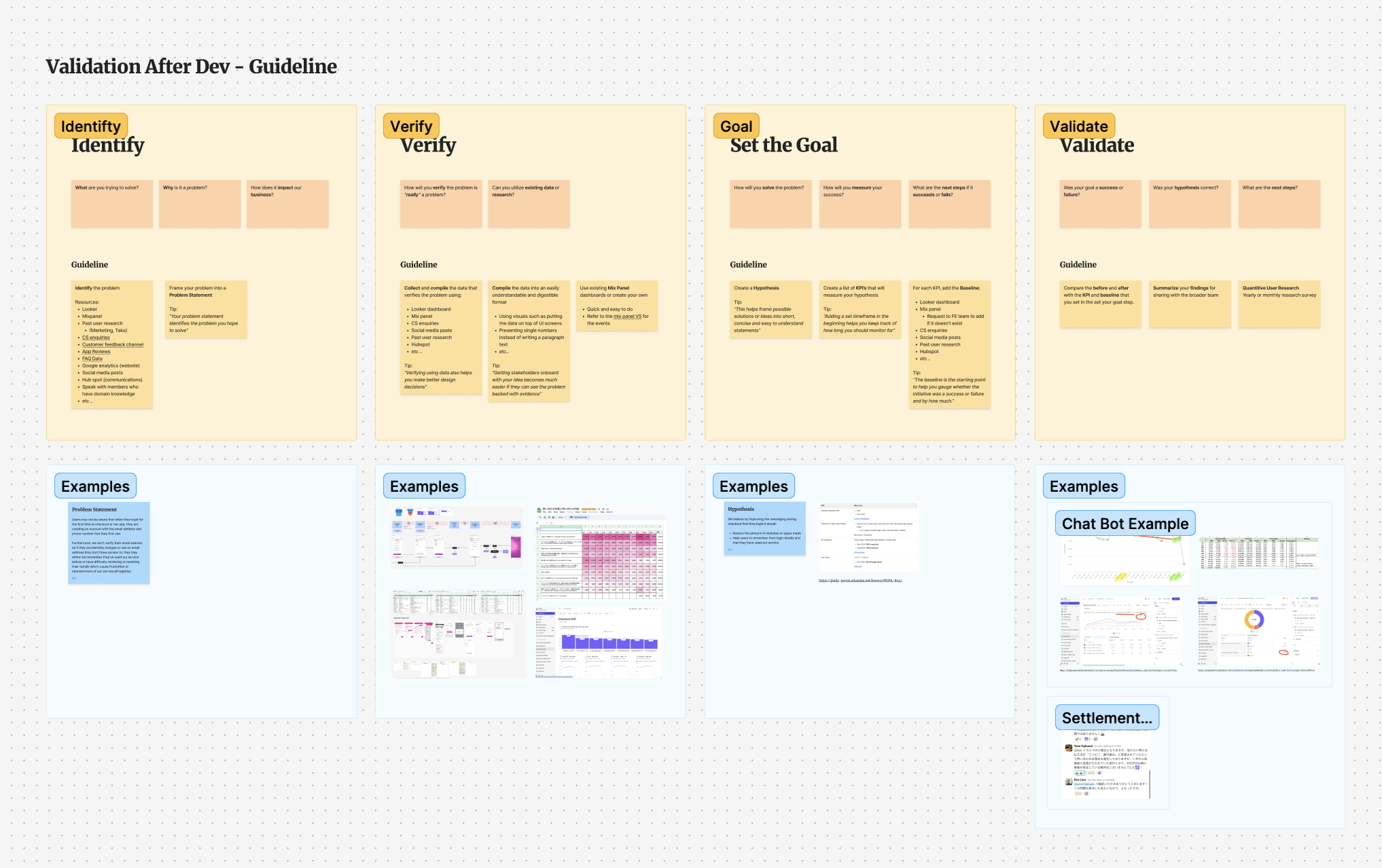
The workshop established a four-stage validation framework:
1. Identify
Define the user problem, business opportunity, affected audience, and known constraints.
Key questions included:
What problem are we solving?
Who is affected?
What evidence shows the problem exists?
What business or technical constraints must be considered?
2. Verify
Confirm the problem through research, behavioral data, customer feedback, stakeholder knowledge, or existing product evidence.
This stage helped teams distinguish validated problems from internal assumptions.
3. Goal
Define the intended user and business outcomes before selecting a solution.
The team aligned on success criteria, priorities, and how the outcome would be evaluated.
4. Validate
Test the proposed solution through the most appropriate method, such as prototype testing, usability testing, technical review, analytics, or experimentation.
The framework created a shared path from problem identification to development readiness.
Workshop Outcomes
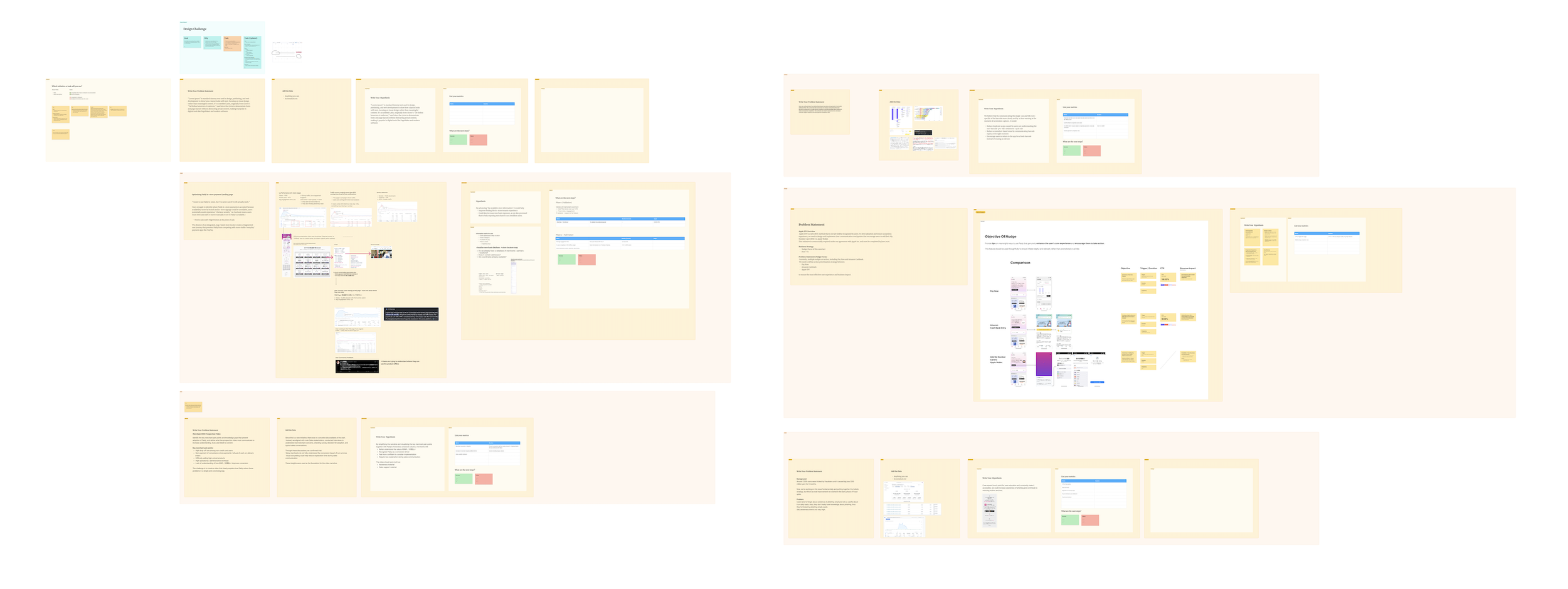
Each stage of the design lifecycle was documented with clear objectives, expected inputs, and outcomes.
Clarified stakeholder responsibilities
The framework established how Design, Product, and Engineering should contribute at each validation checkpoint.
Standardized design reviews
Teams aligned on the information and evidence needed to evaluate design quality and development readiness.
Documented the process
Workshop decisions were captured in a repeatable framework that teams could reference in future projects.
Validation and Refinement
Follow-up evidence
The framework was first piloted through one project per designer. After those initial applications and refinements, the design team adopted the framework as its shared validation approach. Design, Product, and Engineering reviewed the framework against existing delivery workflows. Their feedback simplified the checkpoints, clarified discipline ownership, and kept the process flexible for different project sizes.
Result
The documented Identify → Verify → Goal → Validate framework became a shared reference for later design reviews and development-readiness conversations. This public case study focuses on how the framework was used rather than formal adoption-rate reporting.
Business Impact
Outcome
Established a shared vocabulary for design validation, aligned cross-functional review expectations, clarified responsibilities at key checkpoints, and moved risk discussions earlier in the delivery process.
Evidence shown
The framework documents the inputs, questions, and expected outcomes agreed for each stage, providing teams with a repeatable reference for future reviews.
Key Learnings
Strong product outcomes require shared understanding as well as strong design execution.
Bringing stakeholders into the process early created greater ownership of both the problem and the solution. The framework helped teams move from subjective design discussions toward clearer conversations grounded in evidence, goals, and agreed validation criteria.