
Increasing Passkey Adoption
Redesigned the authentication experience with progressive Passkey onboarding, increasing adoption by 61%, reducing SMS authentication costs by 30%, and creating a faster, more secure sign-in experience.
Timeline: 4 months
Platform: iOS and Android
Stakeholders: Product, Engineering, Security, Research, and Marketing
My Role: Senior UX Designer
My Ownership: I led the behavioral UX strategy, evaluated onboarding directions, defined the progressive-enrollment approach, and designed the end-to-end experience. Cross-functional partners contributed requirements, feasibility input, validation, and rollout decisions.
Responsibilities: Product Strategy, User Research, Interaction Design, Prototyping, Usability Testing, and Experimentation
The Challenge
Passkeys offered a faster and more secure alternative to SMS authentication, but adoption remained below business expectations. Most users continued using the familiar SMS verification process, increasing operational costs and limiting the transition toward passwordless authentication.
The challenge was not simply introducing a new technology. We needed to change user behavior without interrupting sign-in, payment, or other high-intent experiences.
Business Goals
Increase Passkey awareness and adoption
Reduce reliance on SMS authentication
Improve login speed and account security
Protect conversion across payment and authentication journeys
Create a scalable onboarding pattern for future authentication features
Discovery
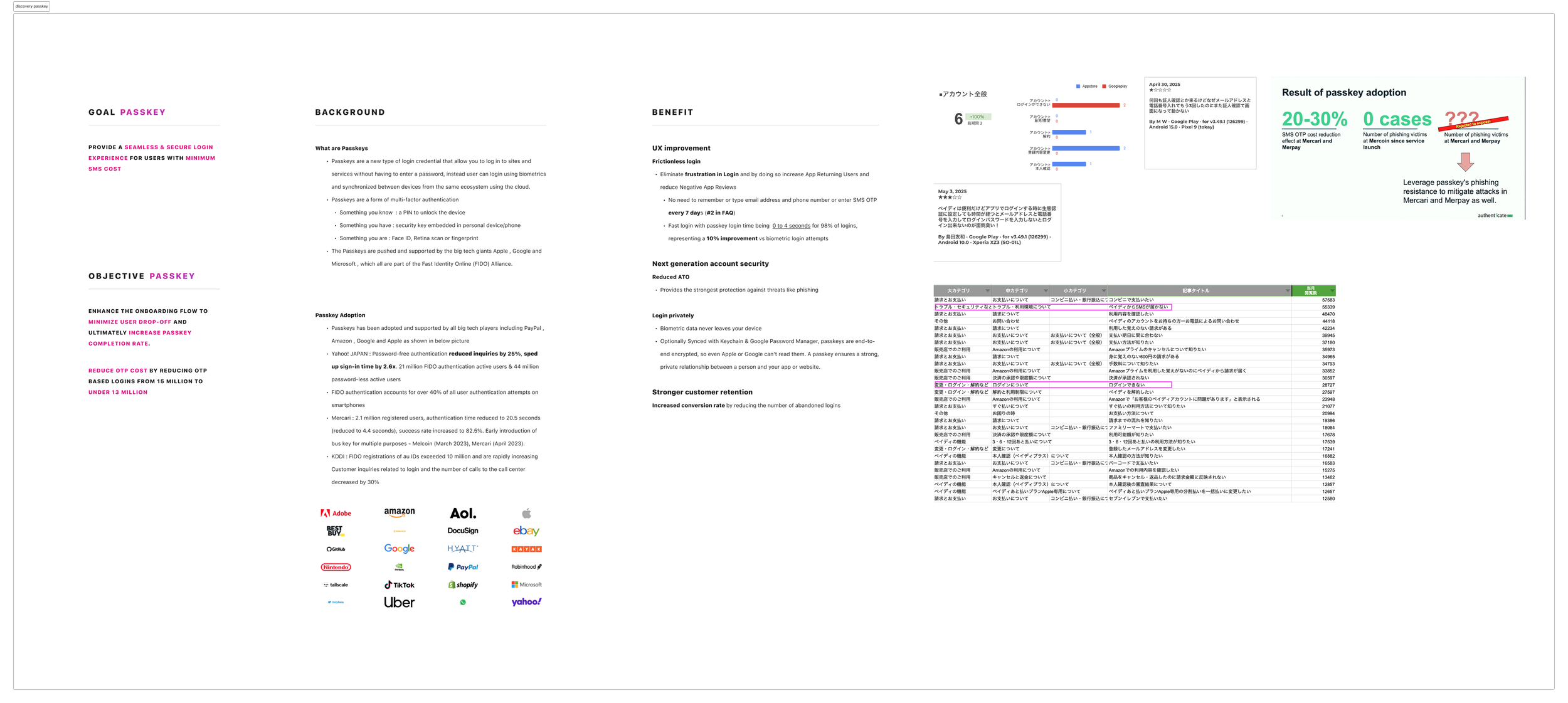
Inputs: Authentication analytics, customer feedback, behavioral research, and cross-functional input helped identify adoption barriers.
Design implication: Trust, prompt timing, and perceived setup effort shaped the progressive onboarding direction. The validation section below describes the sample, selection, and rollout separately.
Key Insights
Setup felt like additional work
SMS verification was already familiar. Even when Passkeys offered a better experience, users did not immediately see enough value to justify changing their existing behavior.
Users needed reassurance
Users had questions about security, device changes, and account recovery. Asking them to enroll before addressing these concerns created hesitation.
Timing influenced adoption
Promoting Passkeys during payment or checkout interrupted the user’s primary task and reduced willingness to consider a new authentication method.
Education needed to come before enrollment
Users were more receptive when they understood the benefits before being asked to commit to setup.
These findings shifted the design challenge from promoting a feature to creating readiness at the right moment.
Product Strategy
Education: Explain the benefits before presenting enrollment.
Reassurance: Address device changes and recovery before setup.
Familiar interaction: Use platform-native authentication to reduce perceived effort.
Timing: Invite enrollment after the primary task, keeping checkout focused on payment.
Design Exploration
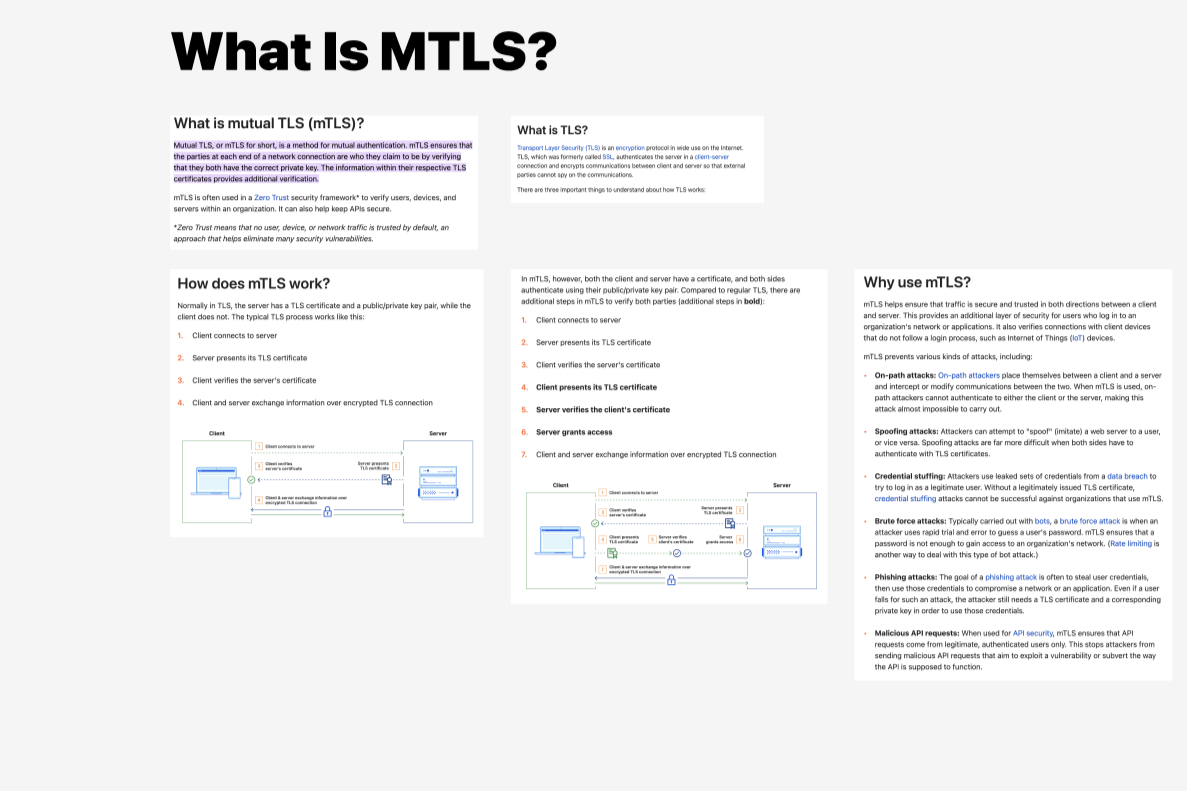
I explored three onboarding approaches.
Option A — Prompt During Checkout (Rejected)
The prompt appeared while users were trying to complete payment. The team rejected it because it introduced an authentication decision inside a high-intent transaction and created a modeled conversion risk.
Option B — Prompt Immediately After Sign-in (Considered)
This placement improved visibility, but it asked for enrollment before users had context about security, recovery, or device changes. Research showed that this uncertainty increased hesitation.
Option C — Progressive Onboarding (Selected)
The selected direction separated education from enrollment: explain the value, answer recovery concerns, simplify setup, then prompt after the primary task. It best balanced adoption, security requirements, and user intent.
Solution
1. Education and decision: The opening screens pair benefit messaging with a prominent magenta setup action. Context comes before commitment, so users can understand the change before starting enrollment.
2. Reassurance before setup: Research surfaced uncertainty about recovery and device changes. I moved this explanation ahead of enrollment and placed the invitation after the user’s primary task.
3. Native authentication: The flow transitions from Paidy’s branded screens into the platform’s authentication interface. The screen sequence shows this change in visual treatment rather than presenting every step as a custom product screen.
4. Completion feedback: The final state confirms that setup has completed, giving the progressive journey a clear endpoint.
Inspect the screens: Click the four-screen sequence at the top for a larger view of messaging, action placement, and native authentication. Click the flow below to compare iOS and Android. Both platforms follow the same education-to-enrollment logic while retaining native system interactions.
Validation
Research question: Could progressive onboarding increase Passkey enrollment while keeping authentication easy to complete?
Sample and selection: With Engineering support, we randomly selected Classic users for pre-launch testing involving approximately 10,000 existing users.
What we measured: Enrollment, authentication completion, drop-off, and setup time. We also evaluated understanding of benefits, confidence in recovery, perceived effort, and content clarity.
Finding → design decision: Users hesitated when recovery and device-change expectations were unclear. We moved reassurance before setup and delayed enrollment until after the primary task.
My contribution: I led the onboarding design, evaluated alternative directions, and translated research findings into the progressive flow with cross-functional partners.
Rollout: Availability expanded from 50% to 100% while the team monitored product analytics. Random participant selection and rollout availability are separate from assignment to experiment groups.
Business Impact
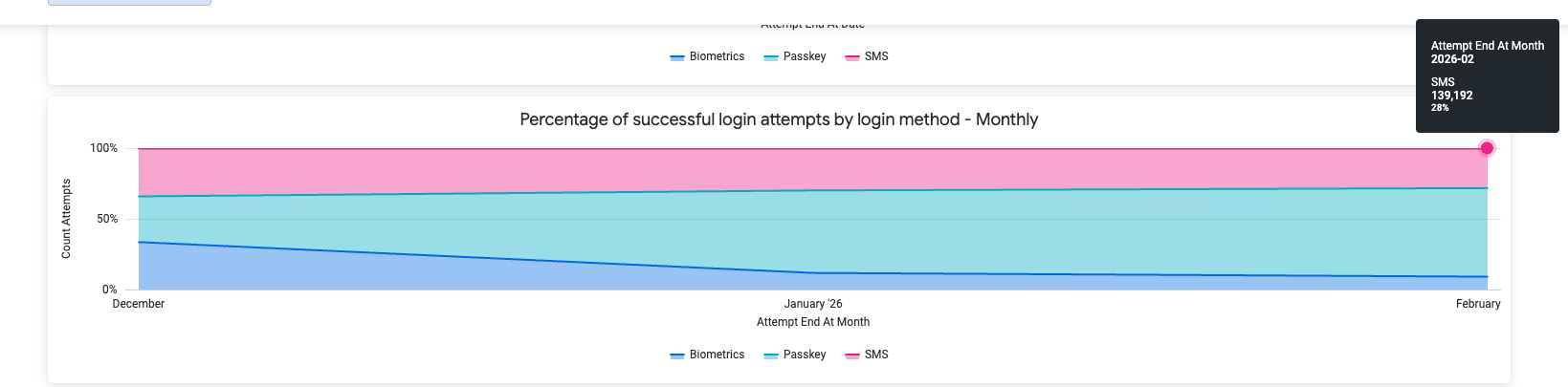
Reported outcomes: Passkey adoption increased by 61% and SMS authentication costs decreased by 30% during rollout.
Measurement approach: Internal product analytics tracked the rollout. Pre-launch testing involved approximately 10,000 randomly selected existing Classic users; availability later expanded from 50% to 100%.
Interpretation: Random participant selection and staged availability do not establish assignment to control and treatment groups. These figures are reported rollout outcomes rather than a demonstrated causal estimate from a controlled experiment.
Reporting limits: Exact comparison dates, absolute baseline values, and experiment allocation are not included in this public case. The adoption change is expressed as a percentage, not a percentage-point difference.
Key Learnings
Adoption improved when the journey resolved uncertainty before asking for commitment. The rejected checkout prompt also showed that placement matters as much as copy: a visible prompt can still be the wrong prompt when it competes with a payment task. The reusable principle was to align authentication education and enrollment with user readiness.