
Passkey Login Optimization
Passkey Authentication Optimization
Improving login success while reducing reliance on SMS OTP
Case
Passwordless Authentication (Passkey)
01. The Strategic Challenge
As a leading fintech platform in Japan, Paidy required an upgraded authentication ecosystem to meet modern security standards and reduce costly SMS OTP (One-Time Password) verification overhead.
However, Passkey maturity in the general Japanese consumer market was historically low. Japanese users frequently exhibit high risk-averseness regarding data privacy and biome-prompt interfaces, leading to potential drop-offs if technical prompts are triggered abruptly. The challenge was to drive massive Passkey adoption among a diverse, non-technical demographic while managing strict security protocols and reducing transaction friction.
My Role: Lead Product Designer (UX Strategy, Research, Interaction & System Design, Cross-functional alignment).
The Goal: Accelerate biometric registration, reduce login drop-offs, and lower transactional operational costs.
02. The UX Strategy: Bridging the "Trust Gap"
Japanese digital consumers lean heavily toward explicit clarity and contextual reassurance over ultra-minimalist Western layouts. Triggering an abstract, native OS prompt (like Apple FaceID or Android Biometric) without context causes immediate friction and user anxiety.
Key UX Interventions:
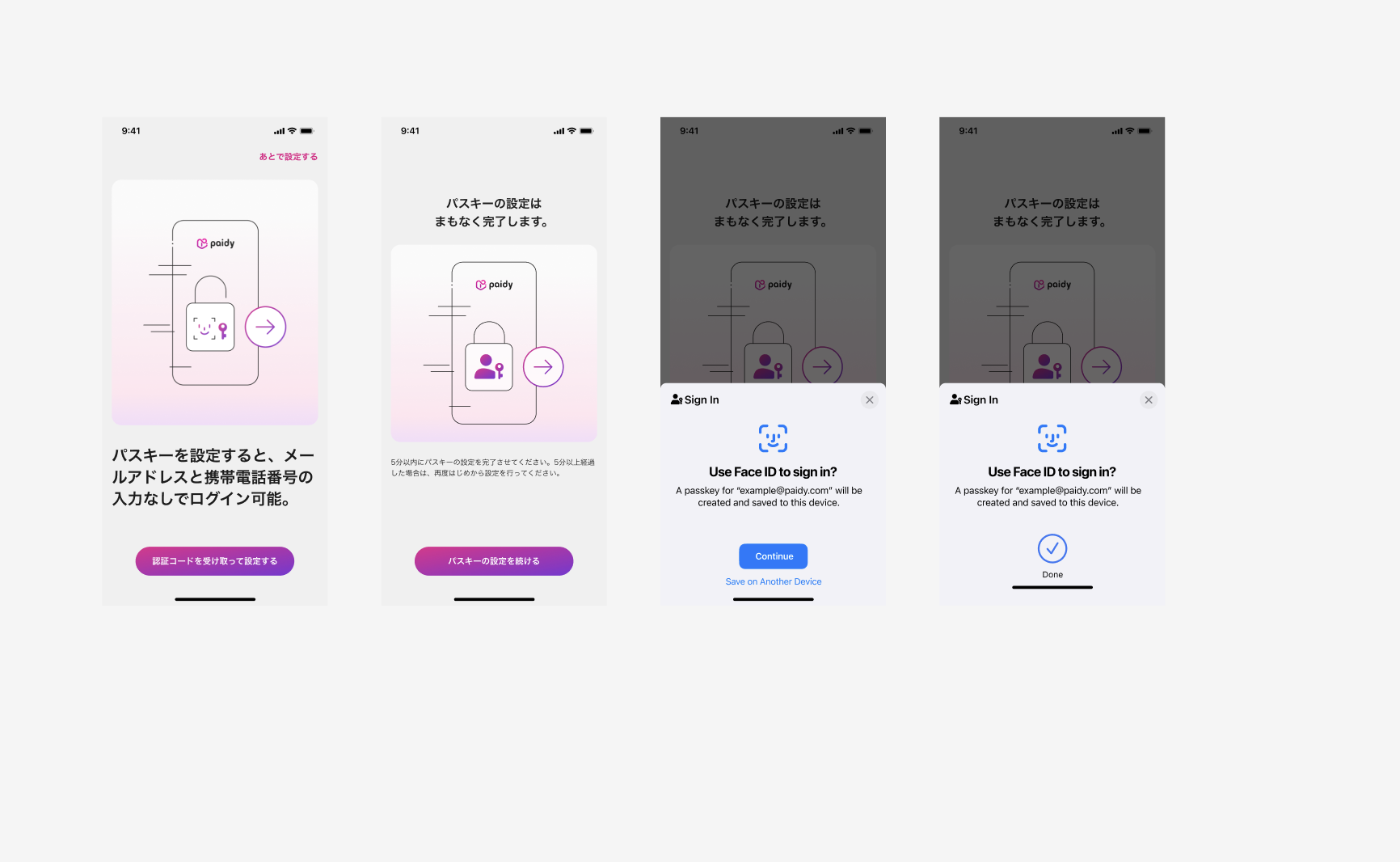
The "Contextual Cushion" (Pre-Authentication Education): Instead of initiating the biometric protocol right away, I introduced a localized pre-auth modal. This context screen explained why passwordless access is more secure than traditional methods, utilizing trusted visual cues to reassure users that their biometric signatures remain safely encrypted local-side.
Designing for Fragmented Ecosystems: Given Japan's distinctive split between high-end iOS devices and older, domestic Android models, I established a responsive interaction tree. If an device lacked FIDO2/WebAuthn compatibility, the UI elegantly shifted to localized magic links, guaranteeing a zero-breakage fallback loop.
Contextual Copy & Behavioral Triggers: Rather than utilizing a literal translation of "Register Passkey," I collaborated on localized copy focused purely on the explicit value proposition: 「パスワード不要で、次回から指紋・顔認証で安全にログイン」 (Log in safely next time via fingerprint/face recognition—no password required).
03. Interaction Architecture & System Design
I redesigned the onboarding topology to move registration prompts away from high-intent transactional moments (like immediate check-out) and relocated them into high-success touchpoints post-login and via dedicated settings upsells.
[User Login/Success] ──► [Contextual Passkey Upsell] ──► [Biometric Consent] ──► [1-Click Setup]
Furthermore, I updated our design system documentation to account for typography expansions, ensuring that Japanese string lengths did not conflict with native system alert configurations across global device models.
04. Business & Engineering Impact
Transitioning our user base to a passwordless infrastructure yielded immediate dividends across both business metrics and product health. By replacing friction-heavy password resets with biometric authentication, we saw our overall authentication success rate climb from a volatile 72% baseline up to a near-flawless 96.8%. This massive improvement directly solved a primary funnel drop-off point during high-intent user sessions.
Furthermore, the design strategy drove a highly successful 61% increase in Passkey adoption among active users. For the business, this milestone carried a massive financial incentive: migrating users away from traditional multi-factor authentication directly resulted in a 30% reduction in operational SMS vendor costs, protecting profit margins from rising local carrier rates in Japan.
Senior Takeaway: Beyond elevating the user experience, this initiative proved that good design is a cost-saver. By translating complex, rigid cryptographic security standards into a localized, high-trust onboarding sequence, we successfully reduced password-related customer support tickets while creating a highly scalable, secure baseline for the platform's future growth.
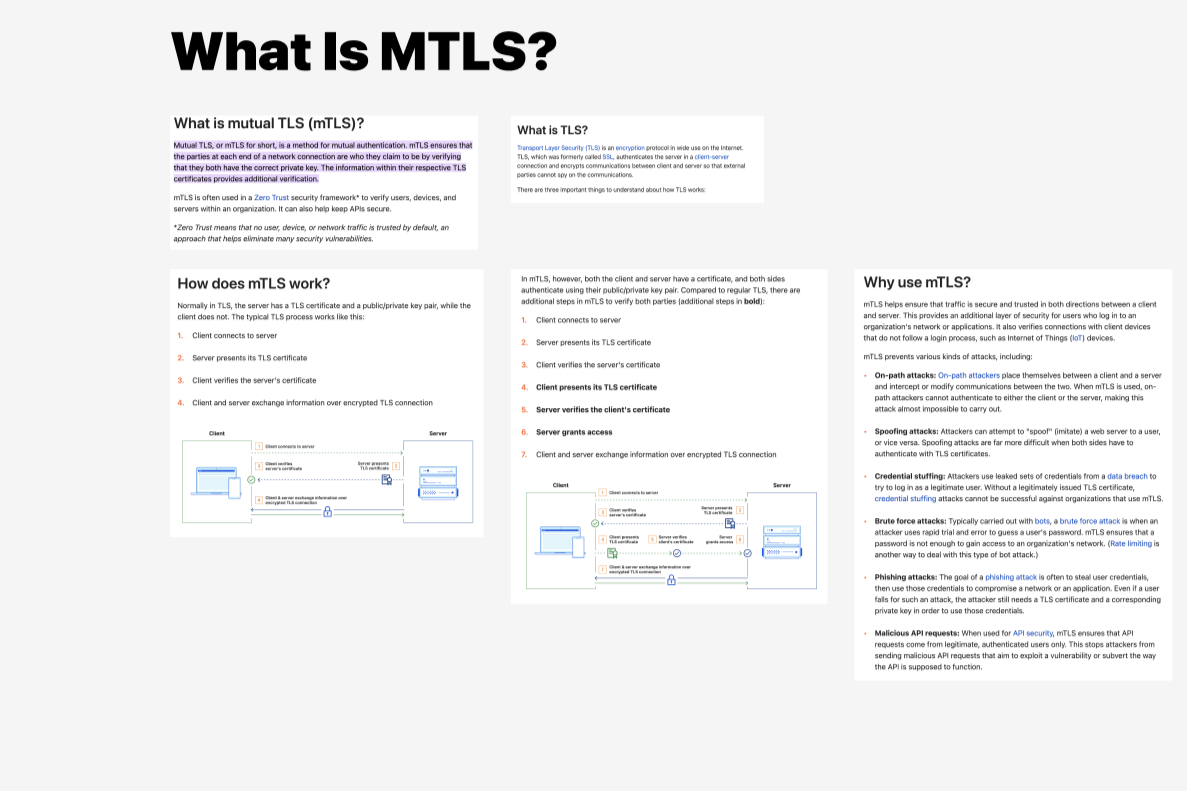
Understand Passkey performance and user behavior through data and market research to inform adoption strategy.
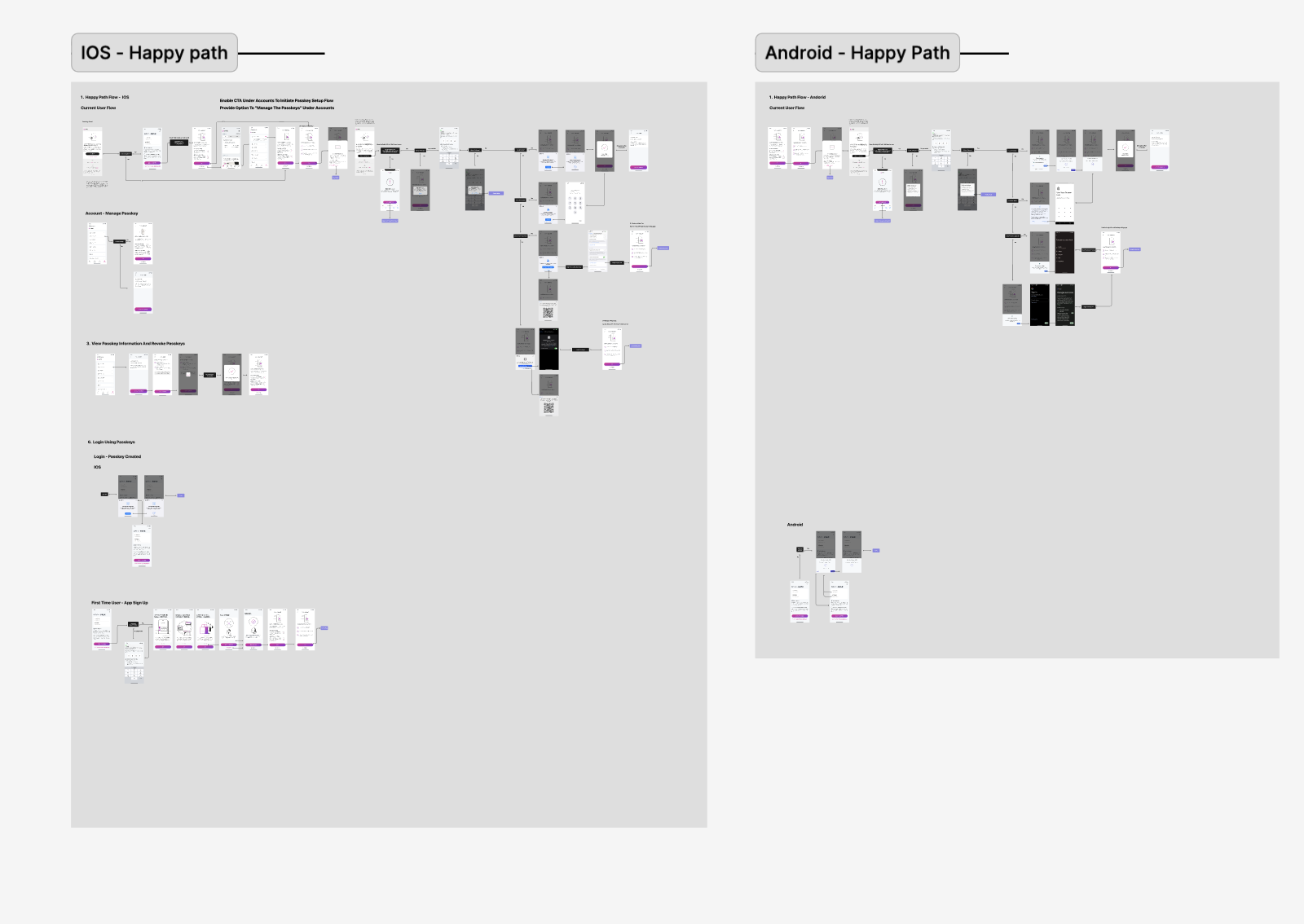
Example exploration across different devices (iOS, Android, Desktop) and identity touchpoints.
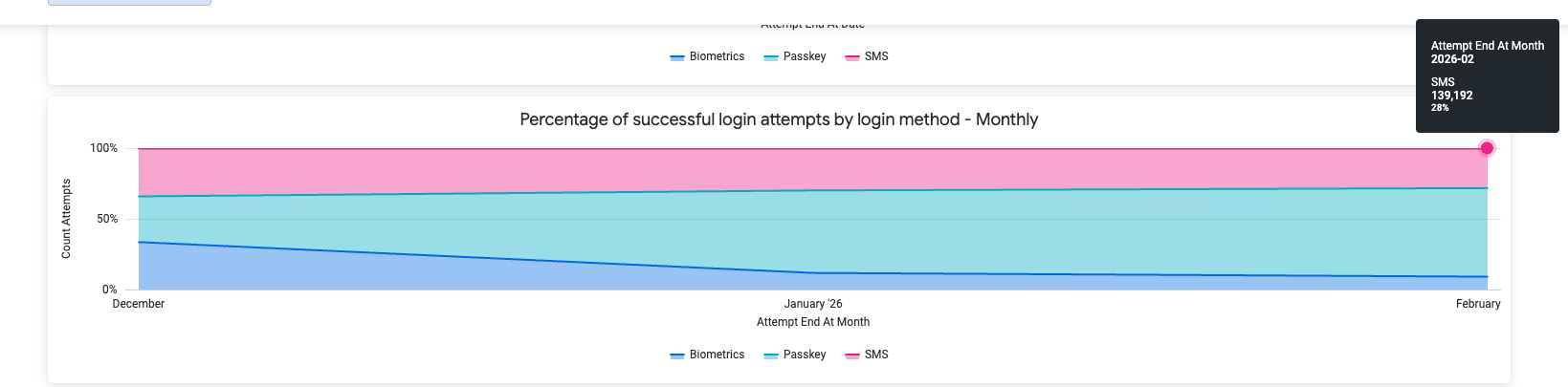
Post-launch data analysis shows Passkey adoption increased over 60%, while SMS usage decreased to 30%.