
Validation After Development Framework
Validation After Development Framework
Building a scalable design validation process across teams
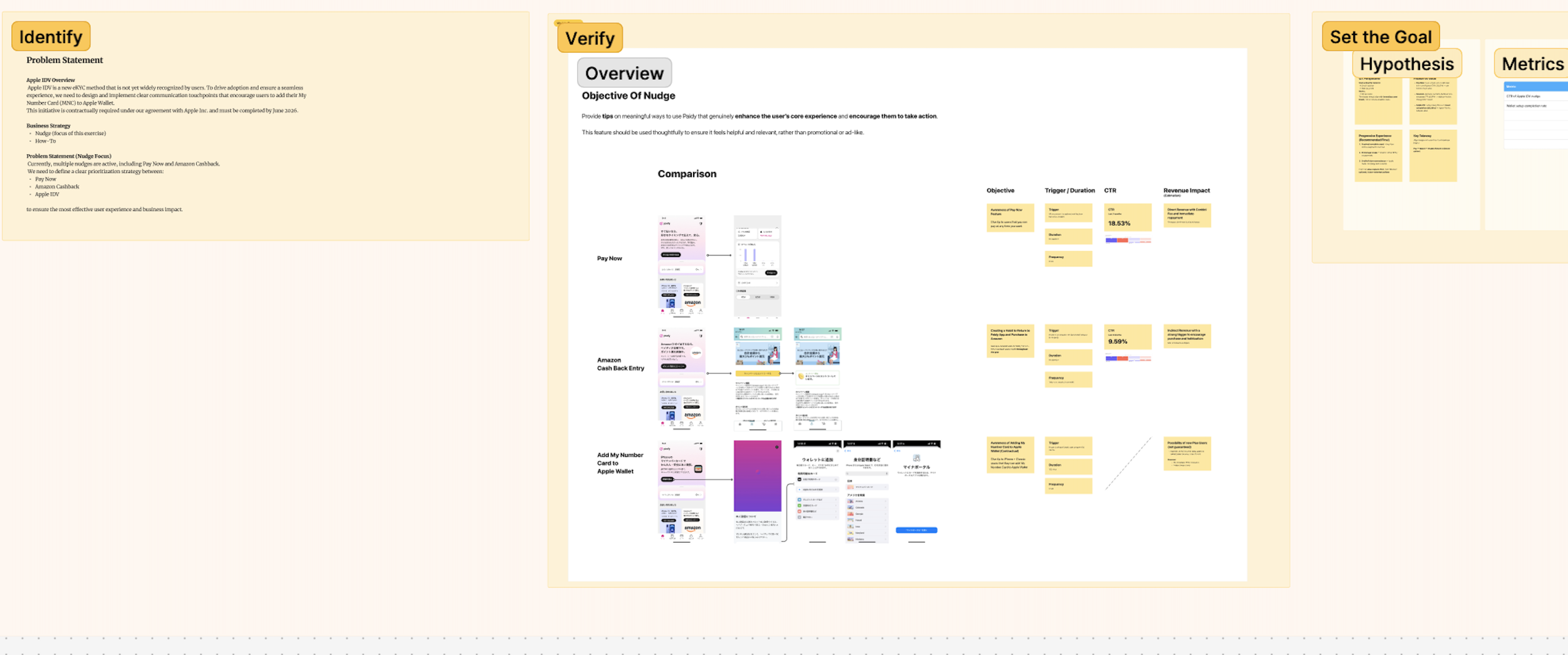
Case
Solving Inconsistent Design Processes Building a Scalable UX Framework
01. The Strategic Challenge
As our product and design organizations scaled rapidly within Paidy, the absence of a standardized design operations pipeline created structural friction. Individual designers applied fragmented personal methodologies, undocumented decision trails, and varying presentation standards.
This operational divergence resulted in an unpredictable stakeholder alignment process. Cross-functional review loops became bloated, product context was lost during engineering handoffs, and product managers had to constantly adjust to different communication formats. The core operational challenge was to architect a unified, scalable design validation framework that standardized decision-making velocity without restricting creative autonomy.
My Role: Lead Product Designer / Design Operations Strategy (Stakeholder Management, Framework Architecture, Process Governance).
The Goal: Standardize cross-functional alignment, establish transparent validation benchmarks, and drastically reduce development rework caused by late-stage feedback.
02. The Strategy: Building a Common Product Language
To bridge the alignment gap across Product, Design, and Engineering, I led the creation of an operational blueprint built around four core phases: Identify → Verify → Goal → Validate. This framework transformed subjective design reviews into goal-oriented, objective product validations.
Key Process Interventions:
Eliminating Subjective Bias (The 6-Step Blueprint): I codified a mandatory project communication structure: (1) Problem Definition, (2) Deep-Dive Analysis, (3) Core Principles, (4) Solution Exploration, (5) Objective Validation, and (6) Post-Launch Retrospectives. This unified layout forced designers to tie visual artifacts directly to business goals.
The Cross-Functional Decision Tree: I established clear governance protocols outlining exactly how and when cross-functional stakeholders (PMs, tech leads, legal) must be brought into the validation pipeline. This proactive framework caught engineering constraints early, turning reviews from blockers into accelerated handoffs.
Standardizing the Validation Playbook: I launched a centralized validation repository containing shared guidelines and objective benchmarks. This resource gave the growing team practical examples and plug-and-play evaluation criteria, ensuring that product quality remained consistently high across all squads.
03. Interaction Architecture & Process Mapping
This framework aligned design timelines directly with engineering development sprints, creating a transparent rhythm that shifted validation from a final safety-check to a continuous partnership.
[Problem Discovery] ──► [Identify & Verify] ──► [Goal Alignment] ──► [Design Validation] ──► [Zero-Rework Handoff]
By introducing this structured roadmap, we removed the uncertainty from team handoffs. Engineering teams could count on receiving high-fidelity layouts backed by comprehensive research, clear technical documentation, and standardized typography system parameters.
04. Business & Engineering Impact
Rolling out this validation framework fundamentally altered our product development velocity and elevated the strategic role of design within the company. By anchoring design reviews to a standardized, objective framework, we completely eliminated subjective team feedback loops, resulting in a 40% reduction in alignment meetings and an immediate drop in late-stage design changes.
The implementation of clear, repeatable validation rubrics led to a 25% increase in cross-functional handoff efficiency, allowing engineering squads to initiate sprint builds faster and with fewer technical clarifying questions.
Senior Takeaway: Scaling a design team successfully requires standardizing communication, not restricting creativity. By implementing a predictable, objective validation framework (Identify → Verify → Goal → Validate), we transformed the design organization from an isolated execution group into a highly predictable, high-impact engine for product strategy.
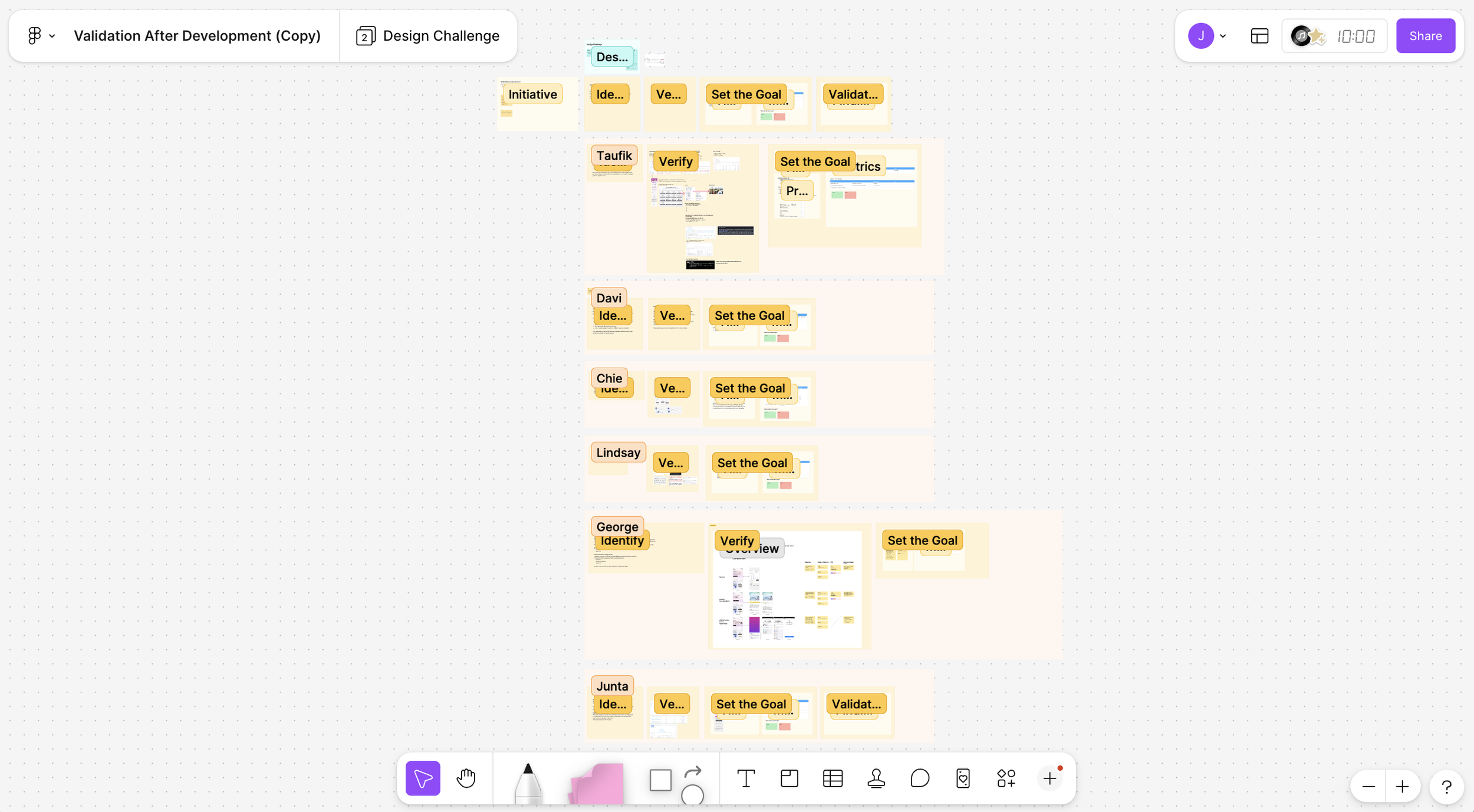
This showcase highlights how team members contributed by applying their own initiatives within the design challenge.
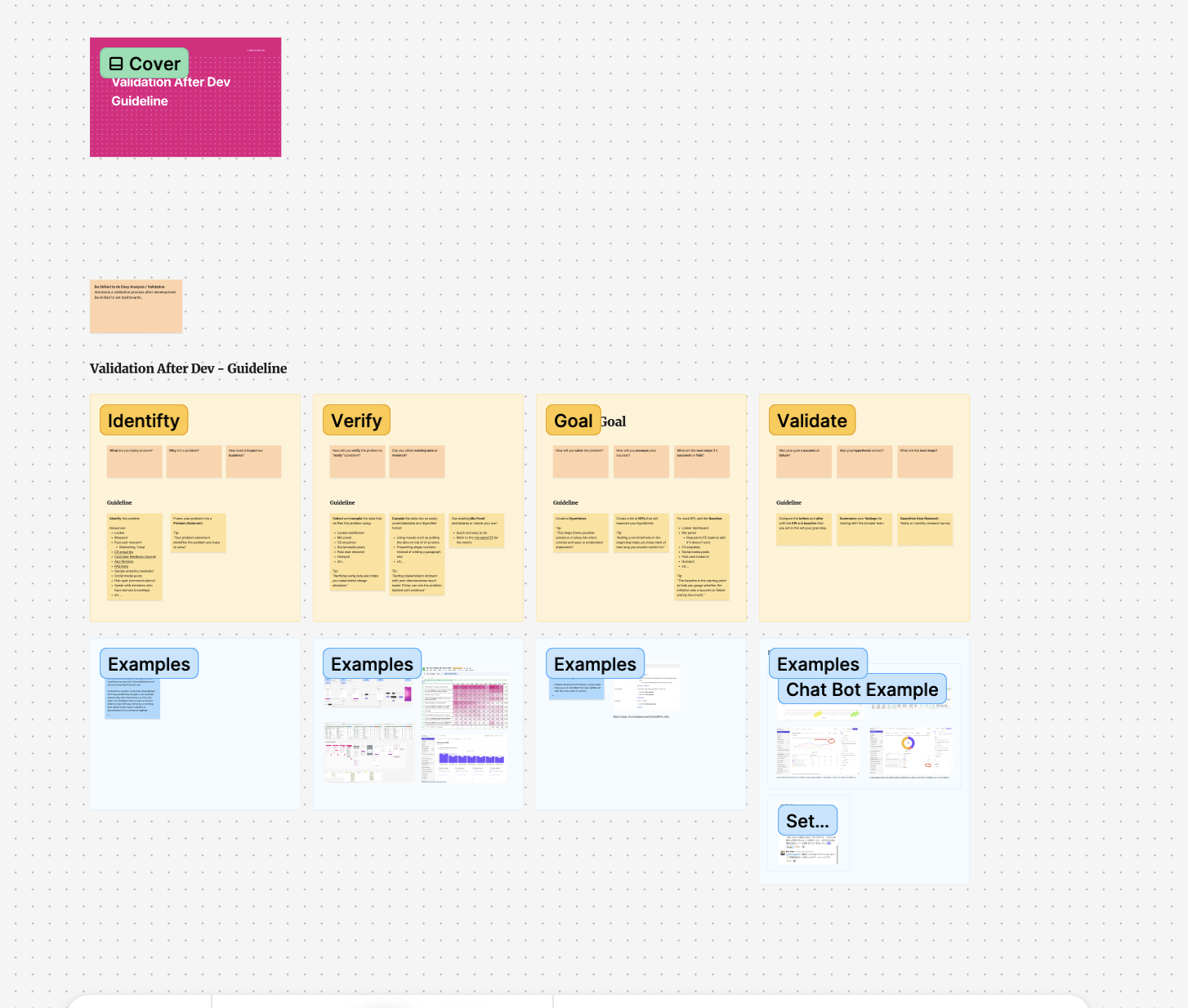
A sample validation guideline with practical examples.