
Apple Wallet IDV: Designing Intent-Based eKYC Nudges
Cross-platform identity verification without disrupting payment journeys
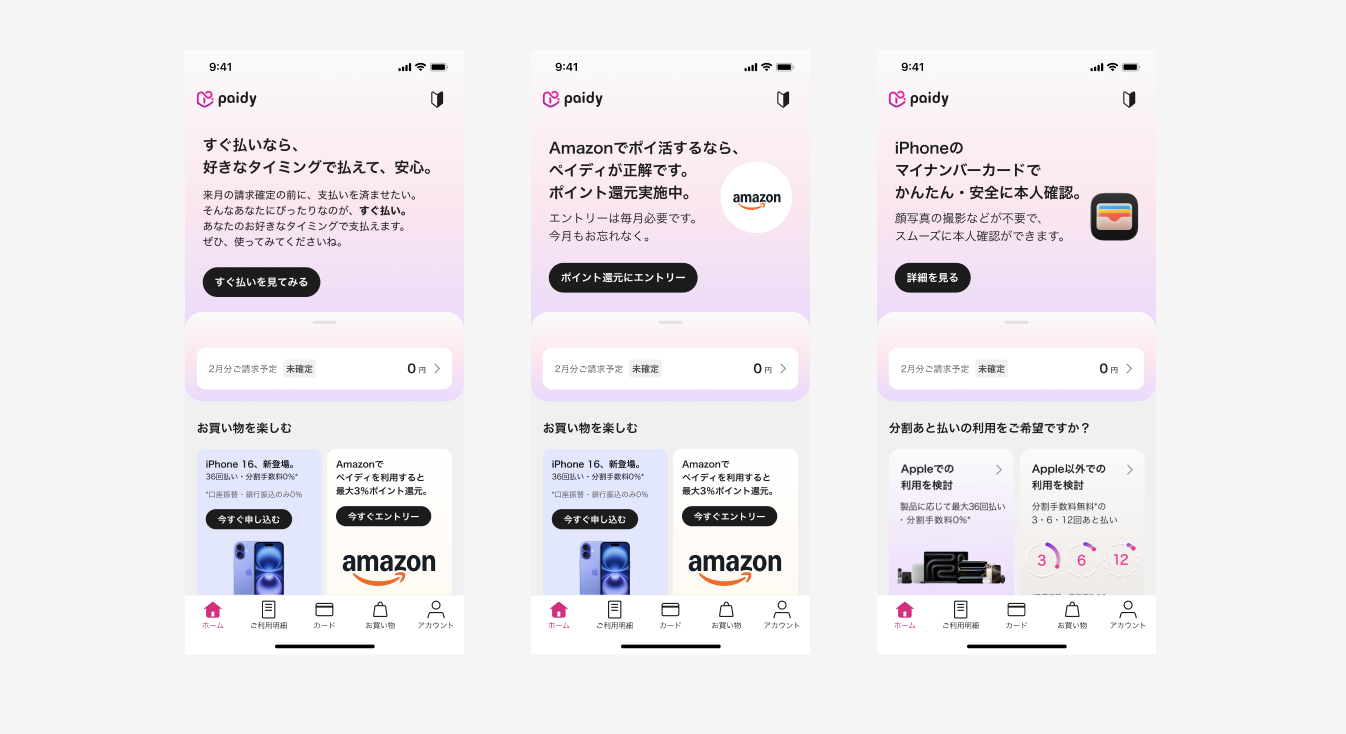
Strategic Product Design Case Study
THE CHALLENGE
Apple introduced support for Japan’s My Number Card in Apple Wallet, creating a new route to identity verification. The experience required users to leave Paidy, add their card in Apple Wallet, and then return to complete eKYC. Because Paidy could not detect whether the card had already been added, the journey needed to guide different user states without interrupting payment.
My Role: Senior UX Designer
Focus: Nudge strategy, cross-platform journeys, interaction design, UX content, prototyping, and cross-functional alignment
Partners: Product, iOS Engineering, Marketing, Legal, and Apple
PRODUCT STRATEGY
I prioritized the experience around Pay → Spend → Enable. Payment and account-management tasks remained primary; Apple IDV promotion appeared only when it matched user intent and would not interrupt a high-value transaction.
KEY DESIGN DECISIONS
Protect payment journeys. Apple IDV nudges were suppressed during checkout and other high-intent payment moments.
Educate before redirecting. A concise How-To experience explained why users were leaving Paidy, what they needed in Apple Wallet, and how to return.
Support multiple starting points. The entry experience helped users understand whether Apple Wallet IDV or an existing eKYC method was the most appropriate route.
Create a clear return path. Messaging and step-by-step guidance reduced uncertainty across the app-switching journey.
VALIDATION
I mapped the end-to-end journey, reviewed technical constraints with Engineering, aligned nudge priority with Product and Marketing, and evaluated the content and interaction flow before implementation. The design accounted for iOS requirements, localization, character limits, and Paidy’s existing identity-verification options.
OUTCOME
The final framework integrated Apple IDV promotion without interrupting core payment behavior. It gave users clearer expectations before leaving the app and created a reusable approach for prioritizing future product nudges.
KEY LEARNING
Good product design is sometimes about deciding when not to interrupt. By respecting user intent and prioritizing Pay → Spend → Enable, the experience supported identity-verification adoption while protecting Paidy’s core payment journeys.
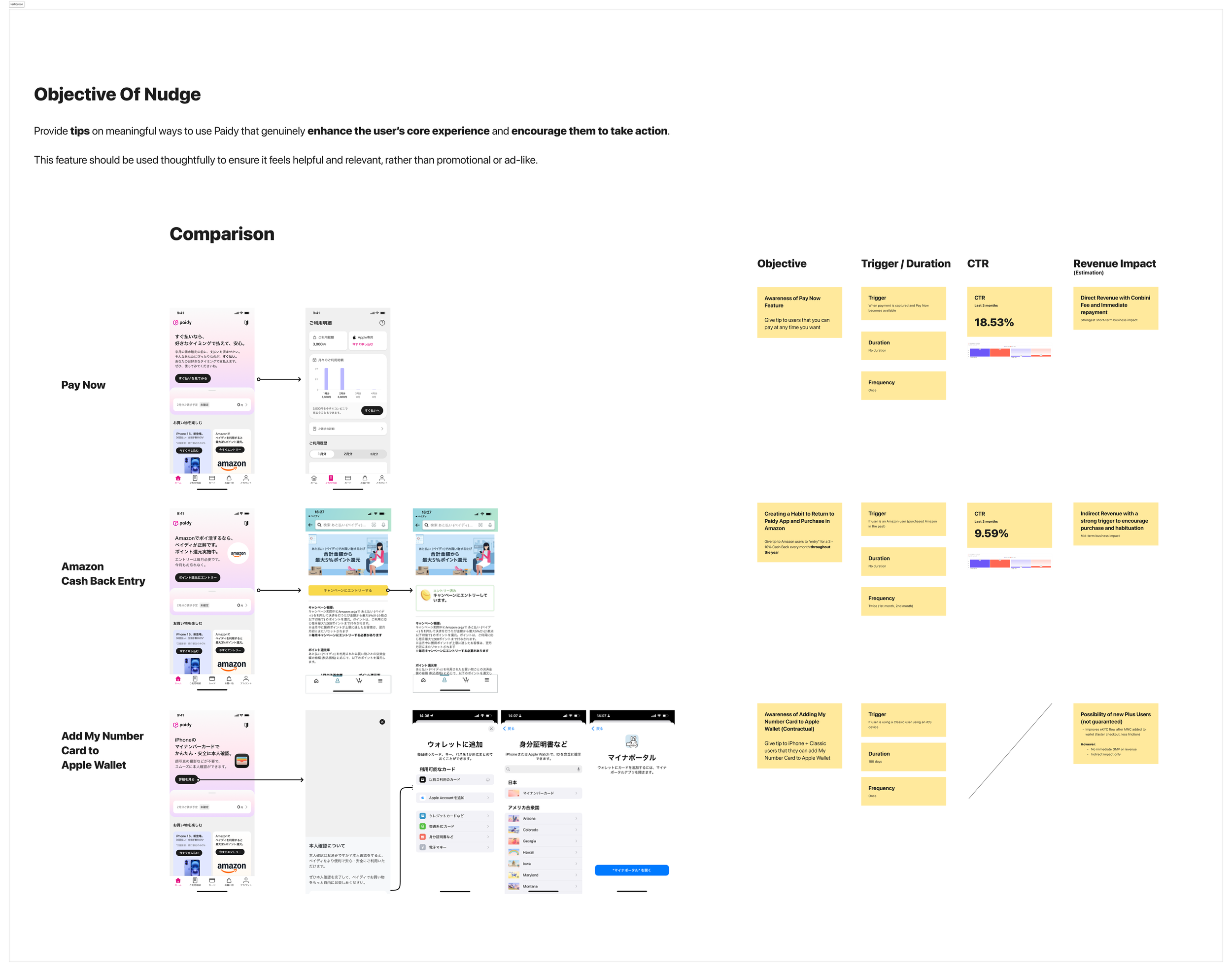
Validate how nudges can meaningfully support the core user experience and drive action by comparing performance data, in order to define clear prioritization.
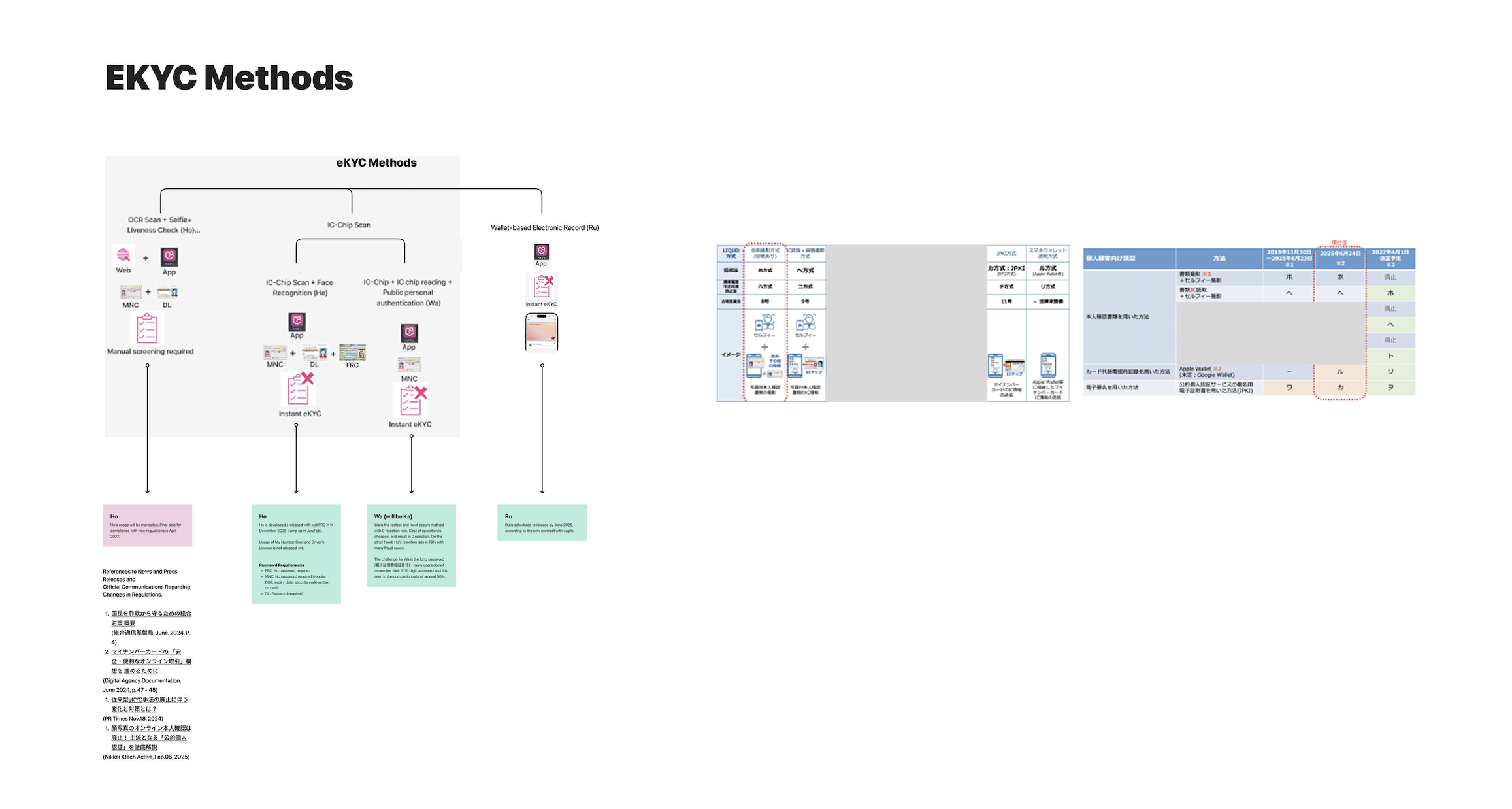
It is important to understand the current eKYC methods (Ru, Wa, He) in order to identify the optimal user journey and determine the most effective way to encourage users to add their MNC to Apple Wallet and complete eKYC.